
You built this. Not overnight — over decades. The business you started or the career you showed up to every single day. The mortgage you paid down. The RRSP contributions you made faithfully every February. The GICs you rolled over. The mutual funds your advisor recommended and you trusted. You did everything right. You followed the rules. You played the long game.
So why does it feel like the numbers aren't adding up?
Not dramatically. Not in a way you can point to clearly. Just a quiet, persistent feeling that what you built should be working harder than it is. That the retirement you were heading toward and the one that's actually taking shape don't quite match. That somewhere between what you put in and what you're getting back — something is being lost.
That feeling is correct. And it has a name.
Your fund returned 6% last year. Your GIC locked in at 4.5%. Your savings account is paying 2%. Each of those numbers sounds reasonable on its own. But subtract the management fees, the spreads, the account costs — whatever name your institution uses for them. Subtract inflation running at 3% to 4%. Factor in the tax you will pay when you finally withdraw. The real return on your money — what actually ended up in your pocket in purchasing power — was likely close to zero. Possibly negative. The statement never shows you that number.
You have probably never sat down and calculated what your RRSP will actually pay you in retirement — after tax, after CPP, after OAS. Most Canadians haven't. And the number, when you finally see it clearly, is almost always lower than expected. Not because you didn't save enough. Because nobody ever showed you the full picture.
Your bank advisor showed you the growth chart. The line going up and to the right. What they didn't show you was the fee schedule quietly compounding against you every single year — or the tax bill waiting for you at the other end of every dollar you saved.
"I thought I was doing everything right. I had been saving for decades — RRSPs, GICs, the funds my advisor recommended. It was only when someone sat down and showed me the actual numbers — after fees, after tax, after inflation — that I understood how much had been quietly disappearing every year. Nobody at my bank ever had that conversation with me."
— Reader, OntarioThe Fee That Nobody Talks About
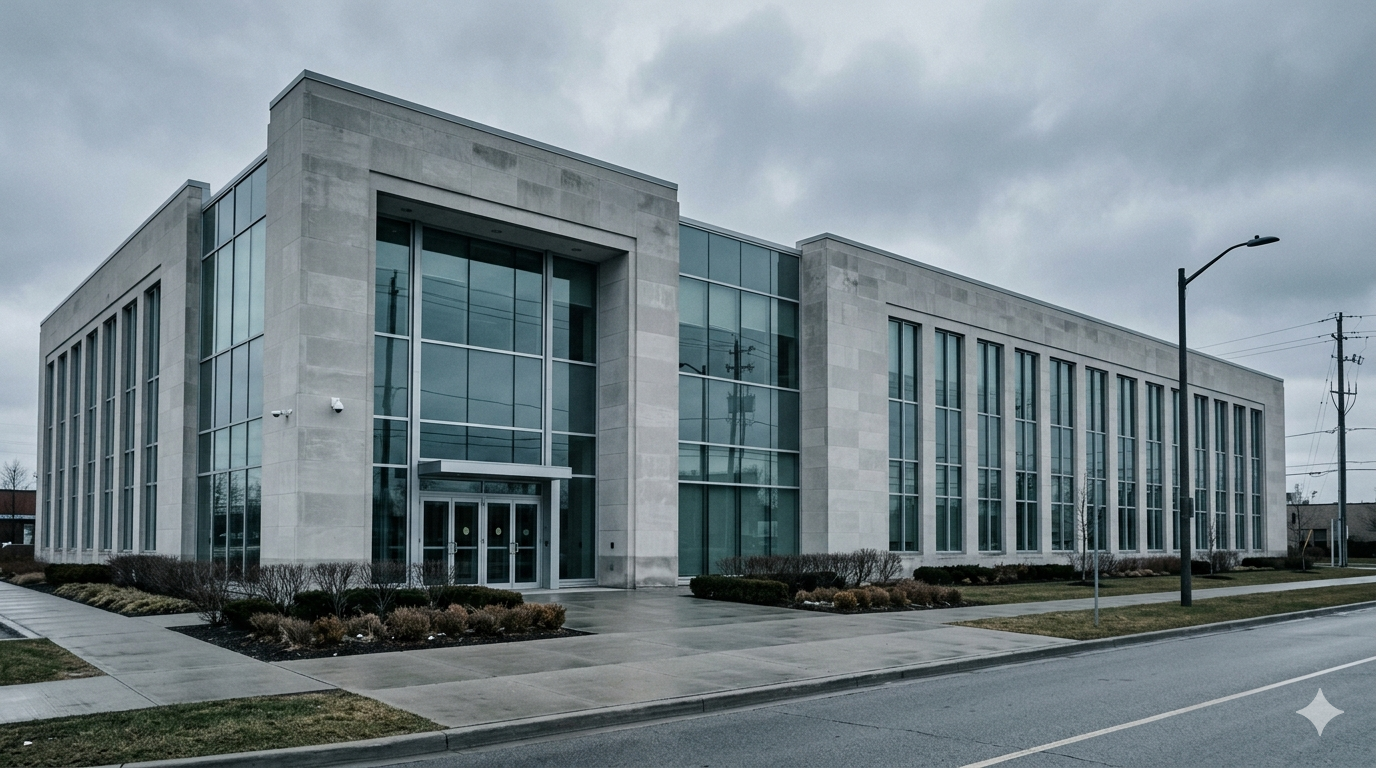
The institution that holds your savings has a business model built on the gap between what it earns on your money and what it pays you back. — Illustrative image.
Whether your savings are in mutual funds, GICs, a managed account, or a mix of all three — there is a cost attached to every one of them. And in Canada, those costs are among the highest in the developed world. At a total annual cost of 2.5% — between management fees, advisor fees, and fund expenses — here is what that quietly takes from you every single year:
Every year. Regardless of whether your investments go up or down. Regardless of what inflation does to your purchasing power. Regardless of whether you are getting anything close to what you paid for.
Over twenty years, the fees and costs paid to Canadian financial institutions can exceed a significant portion of the original amount you saved. The money you thought was working for you has been working for someone else.
Canada has some of the highest investment and savings management costs in the developed world. Not slightly higher — significantly higher. Investors in the UK, Australia, and the United States pay a fraction of what Canadians pay for equivalent products and services. The financial industry knows this. The regulators have discussed it for years. And almost nothing has changed — because the system is extraordinarily profitable for the institutions running it.
You are not a bad investor or a careless saver. You were never given the information you needed to make a different choice.
- What is the real total cost of holding your savings once all fees, spreads, and charges are accounted for — and what has that cost you over the past ten years?
- When you withdraw your RRSP in retirement, combined with CPP, OAS, and any other income, what tax bracket will you actually be in?
- If your GIC or savings account pays 4% and inflation runs at 3.5%, what is your real return after tax?
- If markets dropped 35% tomorrow — like they did in 2008 — how many years of your retirement would that erase?
- If you own a business — are your corporate assets and personal retirement accounts structured to work together, or quietly working against each other?
These are not complicated questions. They are the questions any advisor who genuinely works for you would raise at the beginning of every conversation. Most Canadians have never been asked a single one of them — not because their advisor forgot, but because the answers are not always in the institution's interest to give.
over this period
compounding
after fees
from your savings
The Tax Bill You Don't Know You're Accumulating
Here is something the brochure never explained clearly: your RRSP is not a tax-free account. It is a tax-deferred account. Every dollar you contributed avoided tax going in. Every dollar you withdraw will be taxed as income coming out.
That was the deal — and in theory, it makes sense. You contribute during high-earning years, withdraw during low-earning years, pay less tax overall. Clean and logical.
Except that when you add your RRSP withdrawals to your CPP payments, your OAS payments, any pension income, any other investments — you may find yourself in a higher tax bracket in retirement than you were in during your working years. The RRSP that felt like responsible saving for thirty years becomes, at the moment you need it most, a significant and unavoidable tax liability.
The government requires you to convert your RRSP to a RRIF by age 71 and begin mandatory withdrawals whether you need the money or not. Those withdrawals count as income. Combined with CPP, OAS, and any other income — the bracket can shift in ways nobody modelled for you. Some Canadians find themselves paying more tax in retirement than they did while working. The window to restructure this closes earlier than most people realise.
Then the World Got More Uncertain

The ripple effects of US trade policy have touched every Canadian household — at the grocery store, at the gas pump, at the mortgage desk. — Illustrative image.
You have watched the news. You know what has been happening south of the border. And even if you try not to think about politics, the economic consequences have arrived in your daily life whether you invited them or not.
Your grocery bill is higher. Your insurance renewal was higher. Your energy costs are higher. The Canadian dollar has weakened — which means everything imported costs more, and your purchasing power shrinks a little further every month. The tariffs imposed on Canadian exports have rippled through the entire economy, and the people who feel it most are not the large corporations with lawyers and lobbyists. They are people like you — who built real things over real decades and are now watching inflation quietly undo a portion of that work every single year.
And underneath all of it sits a question you may not have said out loud: what happens if something bigger breaks?
You watched 2008. You remember what it felt like to open a statement and see a number that was significantly smaller than the one from three months earlier. You watched COVID take markets down 35% in a matter of weeks. You are watching geopolitical instability at a level that few people predicted even five years ago. And your retirement savings — the thing you spent your entire working life building — sits in accounts that are exposed to all of it.
Canadian deposits are insured up to $100,000 per category through CDIC. But your mutual funds are not deposits — they are market investments. If markets fall 40% and you are five years from retirement, or already in retirement, you may not have the time to recover. The question is not whether markets can fall that far. They have. Twice in the last twenty years. The question is whether your current strategy accounts for that — or assumes it won't happen again.
The Middle Class Was Promised Something Different
You grew up believing that if you worked hard, saved responsibly, and made sensible decisions — the system would deliver. Not extravagant wealth. Just security. The ability to retire with dignity, maintain your standard of living, and not lie awake worrying about money in the years you had earned the right to stop worrying.
That promise is under pressure in a way that feels different from any previous generation. The costs of living have outpaced wage growth for a decade. Housing values have inflated beyond what most people's savings can match. And the financial system that was supposed to protect and grow the wealth of ordinary Canadians has, in many cases, been more effective at generating fees for itself than returns for its clients.
This is not a political statement. It is a mathematical one. If your savings are growing at 4% and your costs are rising at 4% and your fees are 2.5% — you are going backwards. Slowly. Quietly. Every single year.
Why This Moment Is Actually Different

For the first time, the analytical tools once reserved for institutional investors are accessible to ordinary Canadians. — Illustrative image.
For all of the above — and this is important — there is now something genuinely different available to you. Not a different bank. Not a different mutual fund with slightly lower fees. Something that operates on a different principle entirely.
For decades, the tools that could genuinely optimise a savings strategy — model withdrawal sequences, identify fee drag, stress-test against market downturns, structure corporate and personal assets together — existed only inside major financial institutions and private wealth managers. They were available to the very wealthy, to pension funds, to hedge funds. Not to the business owner in Mississauga with $400,000 in registered accounts and a company he has spent twenty years building. Not to the retired nurse in Victoria with GICs and an RRSP that has never been properly reviewed. Not to you.
That has changed. Not because the institutions decided to share what they had. Because the technology became sophisticated enough that independent specialists — working outside the bank system, with no products to sell — could build something that genuinely serves the person sitting across the table, whatever their situation looks like.
It does not require you to watch markets. It does not require you to make decisions. It does not charge you a 2.5% management fee on your entire portfolio every year regardless of performance. It runs in the background — analysing, adjusting, working — while you get on with your life. And the specialist who reviews your situation will show you, in plain numbers, what that looks like for your specific accounts and your specific timeline.
You spent decades building what you have. The question worth asking — the one your bank will never ask for you — is whether it is now protected and positioned the way it should be.
What You Leave Behind

For many Canadians at this stage of life, the most important question is no longer about their own comfort — it is about what they pass on. — Illustrative image.
And if you are thinking beyond yourself — which many Canadians at this stage of life are — the question becomes even more urgent.
You did not build this only for yourself. The business, the savings, the decades of discipline — some part of that was always for the people who come after you. Your children. Your grandchildren. The idea that what you built would outlast you and mean something beyond your own retirement years.
Inflation erodes that. Fees erode that. Taxes erode that. A poorly structured estate plan erodes that. And a financial system that was never designed to maximise your family's outcome — only its own revenue — erodes that quietly, year after year, in ways that are almost impossible to see until it is too late to change.
The Canadians who protect and pass on what they built are not the ones who trusted the default. They are the ones who, at some point, sat down with someone who looked at their specific situation honestly and said — here is what is working, here is what is not, and here is what needs to change.
That conversation is available to you. It costs nothing. It takes twenty minutes. And the window to act on what you learn — to restructure, to protect, to position things the way they should have been positioned years ago — is open now in a way that it will not always be.
"I spent my career building something I was proud of. The review showed me that without a few specific changes, a significant portion of it would have gone to fees and taxes instead of my family. Twenty minutes changed that."
— Reader, AlbertaReader experiences are illustrative. Individual situations vary. Not financial advice.
"I Was Always Taught to Stay Inside the Lines. This Was the First Time I Stepped Outside Them."
Margaret T. is a retired business owner from Burlington, Ontario. She requested a review after reading this article three months ago. Senior correspondent James Collier spoke to her about what stopped her from acting sooner — and what changed when she finally did.
If you have spent years contributing to registered accounts, holding mutual funds or GICs, running a business, or building investments — and you have quietly wondered whether everything is as protected and as productive as it should be — this is for you.
Northern Wealth Review has partnered with a team of licensed Canadian financial specialists who offer a free 20-minute portfolio review. Not a sales call. Not a product pitch. A real conversation with someone whose only job is to look at your specific situation honestly and tell you what they see.
Due to the volume of requests received, each application is reviewed individually. Not every request will receive a slot — but if what you have read resonates with your own situation, you are very likely a strong candidate. The review is free. The conversation is honest. And the window to act on what you learn is open now.
You built something real. You deserve to know whether it is as protected, as productive, and as positioned as it could be — before the window to change it narrows further. That conversation is available to you now, at no cost, with no obligation. Twenty minutes. That is all it takes to find out.